


Categorization:Harness Component
Many engineers and procurement professionals, when selecting extremely thin coaxial cables, will first focus on "what kind of signal can this cable transmit." In fact, extremely thin coaxial cables are not limited to transmitting just one type of signal; they can be used for internal connections of high-speed differential signals, high-speed digital signals, display signals, video data, and other high-frequency signals based on the cable structure, characteristic impedance, connectors, length, and system design requirements. Taking the I-PEX 81421-100B-02-D introduced this time as an example, this product belongs to the CABLINE®-VS 30Pin extremely thin coaxial cable assembly, using 30 AWG#40 50Ω Micro-Coaxial Cable, with a cable length of 200MM, and the connector model used at the cable end is 20454-230T. The 50Ω coaxial structure can provide a relatively stable transmission environment for high-speed signals, making this type of cable assembly particularly suitable for internal connections of electronic devices with high requirements for signal integrity.
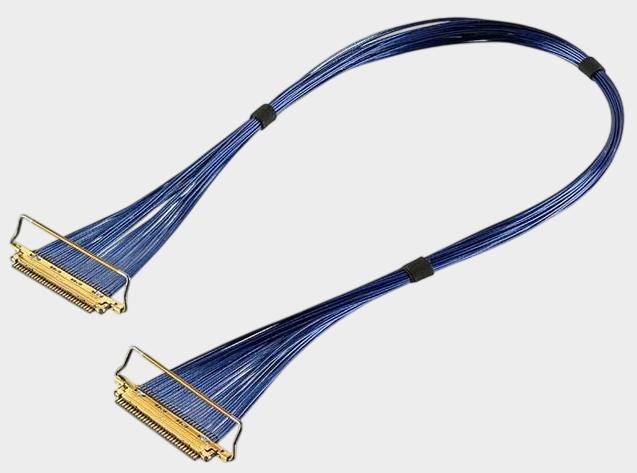
In high-speed electronic devices, common high-speed differential and high-frequency digital signals include USB, DisplayPort, HDMI, eDP, MIPI, and high-speed camera/machine vision data, etc. With the continuous increase in data rates, the rise edges of signals become faster, making ordinary wires more susceptible to factors such as impedance discontinuity, crosstalk, external electromagnetic interference, and transmission loss. The extremely thin coaxial cable, by forming a relatively stable transmission environment through the center conductor, insulation layer, and shielding structure, is beneficial for controlling impedance and reducing external interference. The I-PEX CABLINE®-VS series is designed for high-speed data transmission applications, and the official specifications indicate a reference transmission capability of up to 32 Gbps/lane NRZ. Therefore, engineers can incorporate the extremely thin coaxial cable into the overall design as part of the high-speed signal chain when designing the internal connections of devices such as high-speed displays, cameras, industrial vision, and laptops. It should be especially noted that the high-speed transmission capability of the connector itself does not necessarily mean that any length or any combination of wires can automatically achieve the highest rate of a certain protocol. The actual performance still needs to be verified in combination with the wires, connectors, PCB routing, termination technology, and system signal integrity.
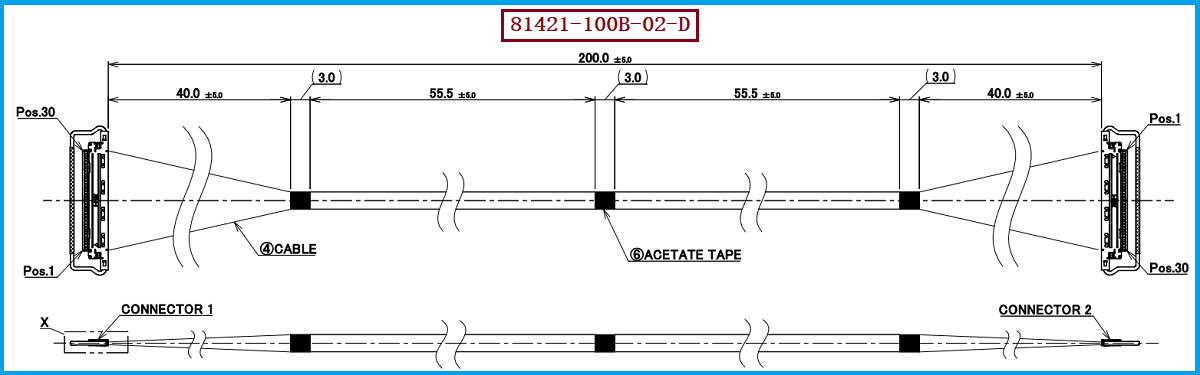
From the perspective of an engineer, determining whether a very thin coaxial cable can be used for the target signal cannot be solely based on "30Pin" or "AWG#40", but should be a comprehensive confirmation of characteristics impedance, cable specifications, Pin Assignment, cable length, connector type, end structure, and actual transmission rate. For example, the 81421-100B-02-D model explicitly uses a 30Pin, AWG#40, 50Ω Micro-Coaxial Cable, 200MM length, and 1-N wire sequence, and uses the relevant end structure of 20454-230T, with the PDF also involving Shell, Pull Bar, and UV Glue Bonding structures. For purchasing personnel, this means that when looking for alternative products, they cannot simply purchase based on "30Pin+200MM", otherwise, even if it can be mechanically connected, there may be issues with the non-compliance of high-speed signal performance. Especially for applications such as high-speed display, AI vision, industrial cameras, etc., it is recommended to focus on confirming impedance consistency, termination quality, and high-speed signal test results during the sample stage to reduce the risk of mass import.
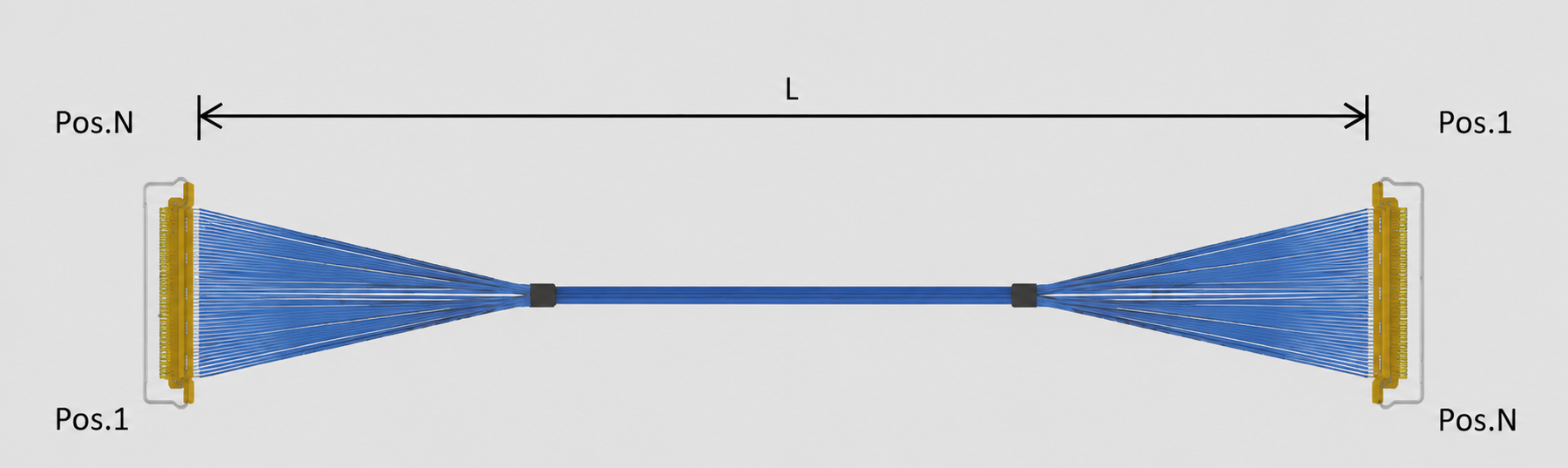
If the customer is looking for a compatible alternative ultra-fine coaxial cable assembly for I-PEX 81421-100B-02-D, it is recommended to use the original product's core parameters and structure as the basis for alternative development, including the CABLINE®-VS series, 30Pin, AWG#40, 50Ω, 200MM, 1-N, and the connector end structure of 20454-230T. If applied to high-speed differential, display, or image signals, it is also necessary to further confirm the actual signal rate, transmission distance, PCB end connector, equipment installation space, and bending and fixing methods. Our company can provide I-PEX 81421-100B-02-D compatible alternative cable assembly solutions, which can develop ultra-fine coaxial cable assemblies based on the customer's original product's Pin count, wire specification, length, wire sequence, and connector end structure, and pay attention to impedance control, end processing, and batch production consistency for high-speed signal applications. For engineers, it is possible to make targeted adaptations based on the actual device interface and signal requirements; for purchasers, it can be around product part number/model, key specifications, sample verification, and batch supply capacity for comprehensive assessment.
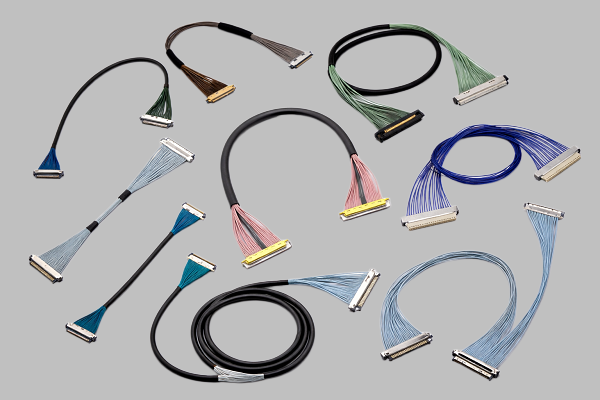
“Without the consent or authorization of this site, no one shall reproduce, reprint, distribute, cite, change, broadcast or publish the content in whole or in part in any form, nor shall there be any other violation of the copyright of this site.