


Categorization:Harness Component
In the internal connections of high-speed electronic devices, both FPC and ultra-fine coaxial cable bundles are common signal transmission solutions, but they are not simple substitutes for each other and require comprehensive selection based on transmission speed, signal integrity, EMI environment, spatial structure, bending methods, connector layout, and cost requirements. Especially in high-speed differential signal applications, ultra-fine coaxial cable bundles have a clear advantage in high-frequency, high-speed, and high-interference resistance scenarios, thanks to their coaxial structure's constraint and shielding capabilities for signals. Taking the I-PEX CABLINE®-CA series as an example, it uses a 0.4mm pitch and horizontal insertion structure, with a connector mating height of about 1.0±0.1mm, and can be adapted to various ultra-fine coaxial cable specifications such as AWG36, AWG38, AWG40, AWG42, and AWG44, and is aimed at high-speed transmission applications up to 32 Gbps/Lane PAM4. Therefore, engineers should not simply understand that "ultra-fine coaxial cable bundles are always better than FPC," but should judge according to specific signal and structural requirements; for procurement personnel, it should also avoid comparing only based on unit price and should consider overall system performance, wiring space, reliability, and subsequent supply chain capabilities.
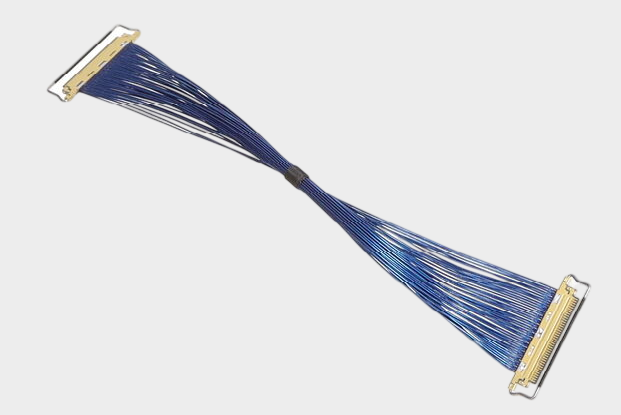
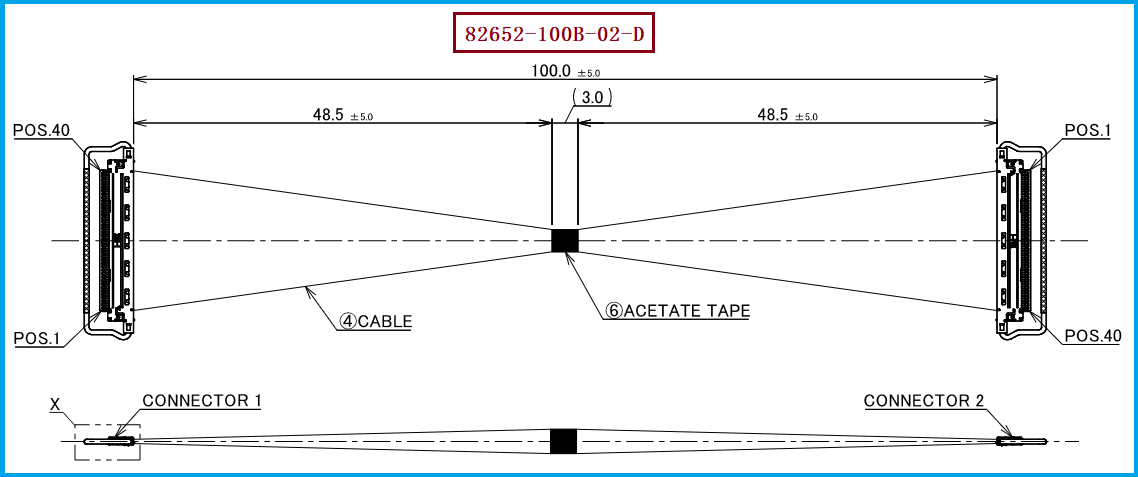
The corresponding product model is I-PEX 82652-100B-02-D, which belongs to the CABLINE®-CA series 40Pin ultra-thin coaxial cable assembly. It uses Micro-Coaxial ultra-thin coaxial wire, with wire specifications of AWG#40 and a length of 100mm, corresponding to 1-N Pin Assignment. The main connector model used at the wire end is 20634-140T-02, which corresponds to the CABLINE-CA 40Pin Plug Housing and can be compatible with AWG#40 wire. For engineers, the selection focus of 82652-100B-02-D is not just "40Pin+100mm", but also further verification of Pin definition, signal arrangement, impedance requirements, wire structure, connector fitment, and corresponding Receptacle on the PCB end, etc. For procurement personnel, these parameters are also the key to determining whether domestic substitute products are truly "compatible". Particularly, the actual high-speed performance of the ultra-thin coaxial cable assembly cannot be solely judged by the maximum rate advertised by the connector. The actual results will also be affected by factors such as wire length, wire structure, impedance, Pin Assignment, PCB routing, and overall SI design of the whole machine.
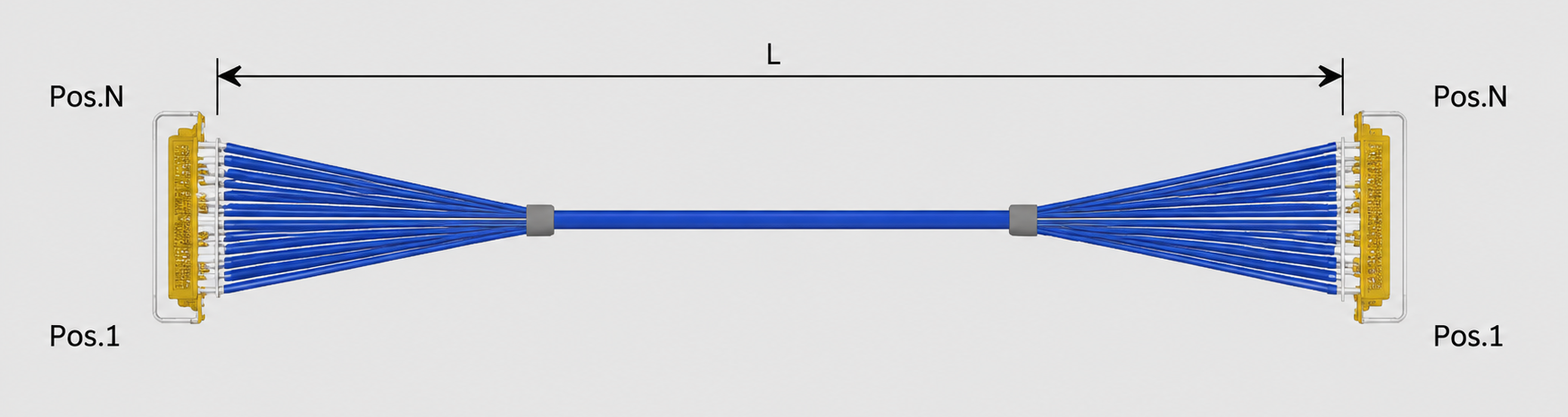
From the perspective of signal transmission, FPC has the characteristics of good flexibility, high structural integration, and suitability for large-area wiring, which makes it still very important in many devices; however, when the system enters the stage of higher frequency and faster signal transmission, the independent coaxial structure of extremely fine coaxial cables allows for a clearer electromagnetic environment between the signal conductor and the shielding layer, which is beneficial for controlling interference, crosstalk, and signal integrity issues during the process of high-speed signal transmission. At the same time, extremely fine coaxial cables can be designed specifically using different AWG specifications and can be adapted to high-density internal connection requirements through different pin numbers and wire length combinations. CABLINE®-CA supports multiple specifications from 10 pins to 60 pins, and a 0.4mm pitch can also meet the space requirements of compact devices. Therefore, the answer to the question "Can extremely fine coaxial cables replace FPC" should be: **Under the premise of meeting design conditions such as connectors, space, signal, impedance, EMI, and mechanical reliability, some FPC applications can completely adopt the extremely fine coaxial cable solution as an alternative, but not all FPCs are suitable for direct replacement.** For applications such as high-speed displays, industrial vision, camera modules, and AI devices, it is more appropriate to determine the scheme based on actual SI/PI verification results.
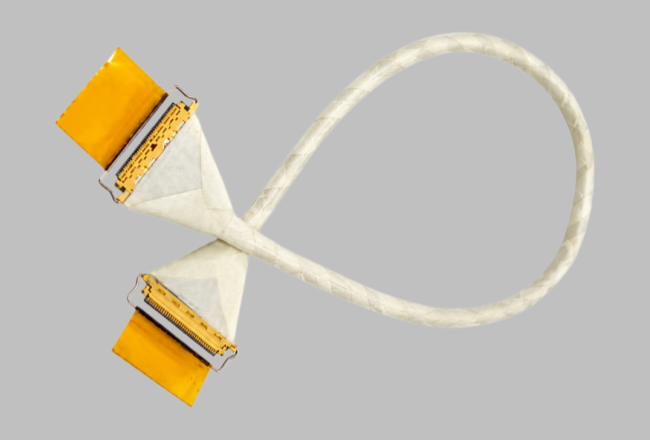
If the engineering project is using I-PEX 82652-100B-02-D, and it is looking for compatible or domestic alternative cables, it is recommended that engineers and purchasing personnel confirm each item in the sequence of "Pin number—wire diameter—length—Pin assignment—connector—impedance—application speed" rather than simply judging whether they can be replaced based on appearance or connector model. For this product, it is important to check key conditions such as 40Pin, AWG#40, 100mm, 1-N, and the cable end 20634-140T-02, and also confirm whether the PCB end connector and the pin definition in the actual equipment are consistent. If the customer's original scheme uses the CABLINE®-CA series, our company can provide a compatible alternative cable scheme for I-PEX 82652-100B-02-D based on the customer's drawings, samples, and application requirements. We will develop a targeted solution around the specifications of the extremely thin coaxial cable, connector matching, cable length, Pin assignment, and production process, which will help engineers reduce the workload of redesign and also provide purchasing personnel with more stable supply channels. For batch projects, we can further optimize the cable material, length, and cable structure based on actual needs, taking into account both cost and delivery time while meeting performance requirements.
“Without the consent or authorization of this site, no one shall reproduce, reprint, distribute, cite, change, broadcast or publish the content in whole or in part in any form, nor shall there be any other violation of the copyright of this site.