


Categorization:Harness Component
Against the backdrop of the continuous development of notebooks, tablets, display modules, VR/AR devices, and high-speed data terminals towards thinness and high speed, the internal signal connection solutions are also changing. Traditional FPC has the advantages of good flexibility and convenient wiring, but not all applications can achieve a balance in high-speed differential signals, EMI suppression, local spatial layout, and signal integrity. This article takes I-PEX 82655-100B-02-D as the reference object, which belongs to the CABLINE®-CA II 40Pin ultra-thin coaxial cable scheme. The cable length is 300MM, using 40AWG Micro-Coaxial ultra-thin coaxial wire, and the wire end uses I-PEX 20680-040T-01 connector. The accompanying CABLINE®-CA II connector adopts a 0.4mm pitch, horizontal insertion and removal, ZenShield® full shielding, and mechanical lock design, facing high-density, high-speed signal connection applications. For engineers, the value of such solutions is not just "thinner wire", but to achieve high-speed transmission, shielding, and reliable connection within the limited device space.
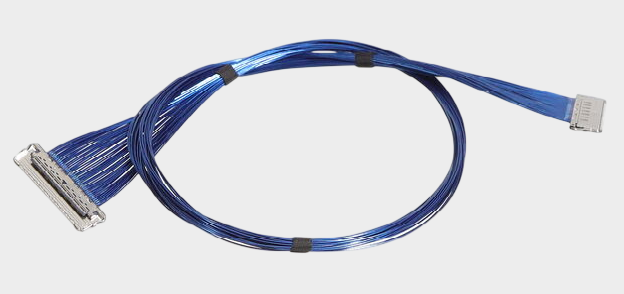
The ultra-fine coaxial cable can it replace the traditional FPC? The answer is: it can achieve replacement in some application scenarios, but it cannot be simply understood as a complete replacement. There are obvious differences between the two in terms of structure and electrical characteristics. FPC belongs to a multi-core flexible printed circuit board, suitable for large-area, regularized, and overall bending internal connections; ultra-fine coaxial cable transmits signals through independent coaxial structures, with each signal line having a relatively independent shielding environment, which is more suitable for high-speed differential signal, and connection scenarios sensitive to crosstalk and EMI. Taking the I-PEX 82655-100B-02-D type 40Pin, 300MM cable harness as an example, in notebook display, high-speed display module, camera/visual equipment, and high-speed data device internal, if the design focus is on high-speed signal integrity, cable independent routing, and anti-EMI capability, ultra-fine coaxial cable harness may have more application advantages than traditional FPC. Especially CABLINE®-CA II supports up to 32Gbps/lane PAM4, and emphasizes ZenShield® full EMI shielding and multi-point grounding, therefore having strong application value in high-speed transmission environments. However, if the device requires large-area continuous wiring, complex PCB interconnection, or large-range flexible folding, FPC may still be more suitable.
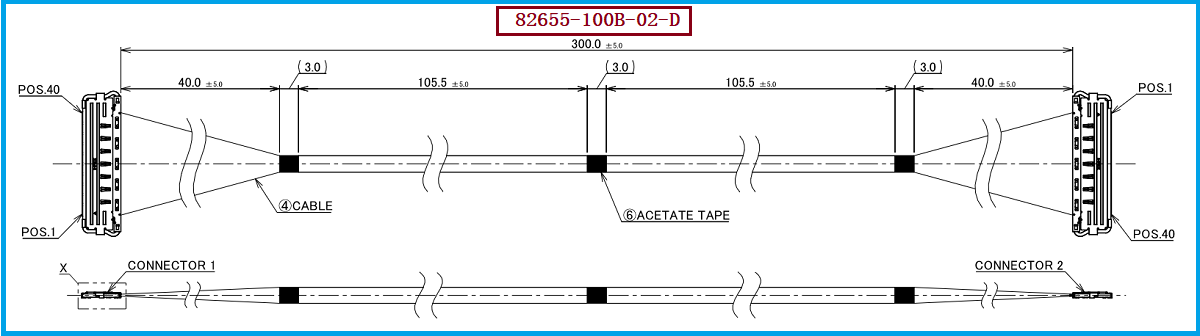
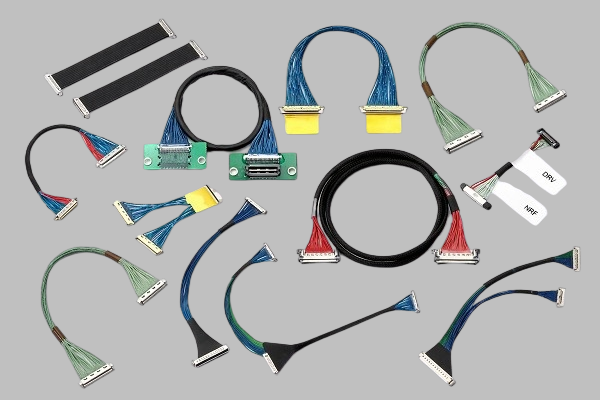
From the perspective of engineering design, if there is a need for high-speed display signals, USB4/Thunderbolt and other high-speed data transmission requirements, a high degree of space limitation, strong EMI interference near the connector, or more flexible independent cable harness routing, it is worth prioritizing the evaluation of ultra-fine coaxial cable harness solutions. The CABLINE®-CA II adopts a contact spacing of 0.4mm, with a height of about 0.95±0.15mm, and supports various ultra-fine coaxial specifications, thereby being able to adapt to high-density, miniaturized equipment internal spaces. From the procurement perspective, it is not only the cable harness unit price that should be compared, but also a comprehensive evaluation of connector matching, pin count, wire diameter, impedance requirements, length, shielding structure, bending path, and batch consistency. For projects that need to replace the existing I-PEX standard cable harnesses, it is necessary to focus on checking the original connector model, pin position, wire sequence, wire length, and equipment installation space. Our company can provide I-PEX 82655-100B-02-D compatible alternative cable harness solutions, which can carry out sample making, material configuration, and mass production of ultra-fine coaxial cable harnesses according to the actual equipment structure and electrical requirements of customers, providing supporting support for engineers to select models for verification and purchasing domestic alternatives.
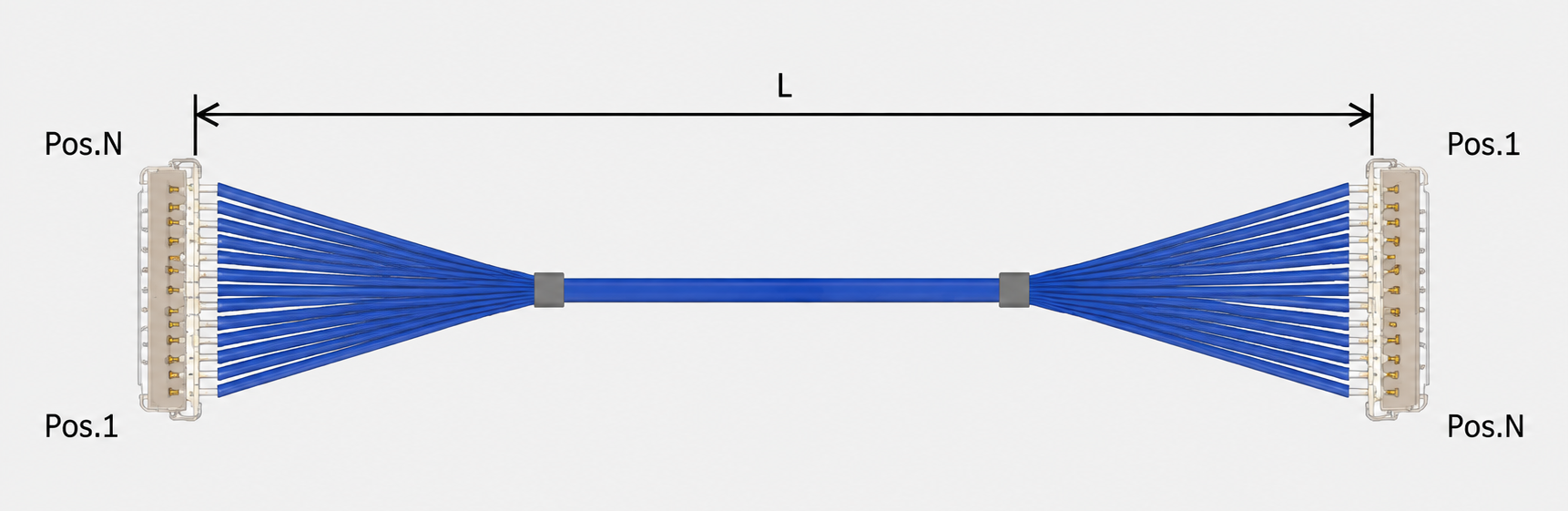
For I-PEX 82655-100B-02-D, the core reference conditions include 40Pin, 300MM length, 40AWG ultra-fine coaxial cable, and wire end connector 20680-040T-01. If the project plans to adopt a compatible alternative solution, engineers are advised to first confirm the paired connector and PCB layout used on the device side, and then further confirm the 40Pin wire sequence, signal definition, impedance requirements, and high-speed protocols; purchasing personnel should focus on confirming the connector brand and model, wire specifications, processing length, end stripping size, shielding treatment method, and batch delivery consistency. It should be particularly noted that "connector外形 compatibility" does not mean "high-speed performance complete equivalence," so it is recommended to perform plug-in matching, continuity, voltage resistance, impedance, signal integrity, and EMI-related verification before formal introduction. For projects that originally used the I-PEX CABLINE®-CA II platform, I-PEX 82655-100B-02-D can be used as a specification and structure reference for the wire harness, and then customized domestic alternative wire harnesses according to actual applications, thereby reducing supply chain costs and procurement risks.
“Without the consent or authorization of this site, no one shall reproduce, reprint, distribute, cite, change, broadcast or publish the content in whole or in part in any form, nor shall there be any other violation of the copyright of this site.