


Categorization:Harness Component
In laptops, tablets, high-resolution display devices, and other slim electronic products, the internal space is becoming increasingly compact, while the demand for high-speed signal transmission is continuously increasing. Therefore, extremely thin coaxial cable assemblies have become an important solution for high-speed signal connections within the device. This article focuses on the I-PEX 82654-100B-02-D, which belongs to the CABLINE®-CA II series 40PIN extremely thin coaxial cable assembly reference scheme. It adopts a 40AWG extremely thin coaxial cable structure, with the cable end using the I-PEX 20680-040T-01 connector, which is a 40PIN, 0.4MM Pitch connector. For engineers, this type of solution primarily addresses "high-speed signal connections, EMI control, and wiring flexibility in small spaces"; for purchasers, it is necessary to pay close attention to cable specifications, connector matching, length, tolerance, batch consistency, and whether stable compatible alternative supplies can be obtained.
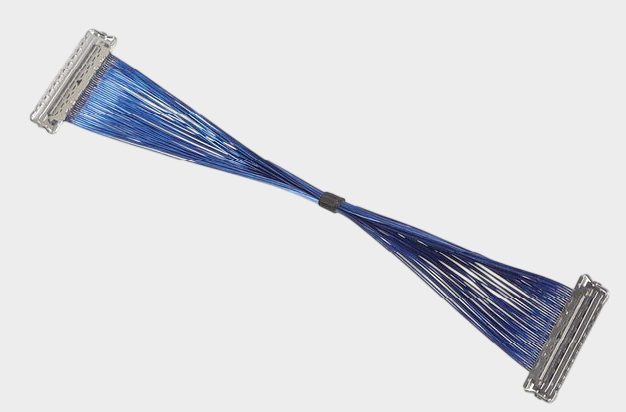
The extremely thin coaxial cable bundle is not designed for high-power supply; its core advantage lies in high-speed signal transmission, rather than high current carrying capacity. Taking the extremely thin coaxial cable with 40AWG grade as an example, its conductor cross-sectional area is very small, and the wire core resistance is relatively high. When a larger current passes through, it will produce a significant I²R joule heat. If the current continues to increase, the internal temperature rise of the wire material will also increase, which may cause the aging of the insulation material, excessive conductor temperature rise, and even affect the reliability of the connector terminals. At the same time, the extremely thin coaxial cable bundle usually adopts a multi-core high-density arrangement structure, with limited heat dissipation space. When multiple channels carry higher currents simultaneously, heat is prone to accumulate. Therefore, "extremely thin" and "high power" inherently exist obvious design trade-offs. From the perspective of engineering design, the extremely thin coaxial cable bundle is more suitable for tasks such as display signals, high-speed differential signals, data communication, etc. For scenarios that require continuous high current transmission, such as batteries, motors, power modules, etc., it is advisable to choose larger diameter, higher current carrying capacity power cable bundles or dedicated power connection solutions. In other words, the extremely thin coaxial cable bundle is not "the larger the power, the better," but should be selected comprehensively based on signal frequency, impedance, transmission speed, current carrying capacity, temperature rise, and spatial constraints.
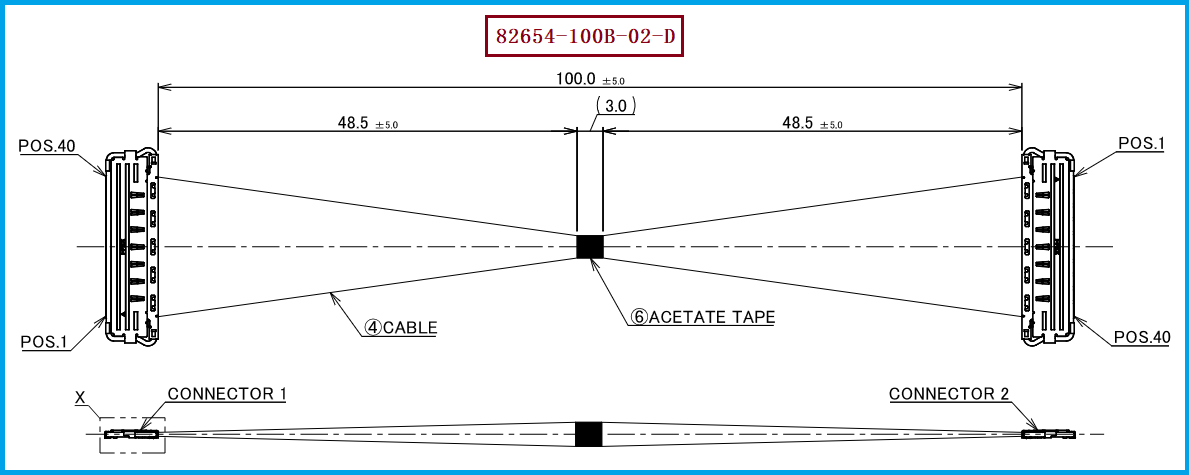
The value of I-PEX 82654-100B-02-D for engineers lies in its ability to achieve high-density signal wiring using extremely fine coaxial structures, while also being compatible with the 20680-040T-01 material end connector to form a 40PIN connection solution with a connector pitch of 0.4MM. A 0.4MM pitch means that more signal channels can be arranged in a unit space, which is conducive to optimizing the internal space of thin and light devices; however, at the same time, it also puts higher requirements on the precision of wire harness processing, terminal crimping/welding quality, consistency of coaxial structure, and assembly accuracy of the connector. For purchasers, when seeking compatible alternative products, they should not simply replace them according to "40PIN connector + same length", but also confirm whether the wire specifications, connector models, Pitch, Pin definition, wire sequence, shielding structure, impedance requirements, and actual assembly dimensions are consistent. Our company can provide: I-PEX 82654-100B-02-D compatible alternative wire harness solutions, which can produce and manufacture extremely fine coaxial wire harnesses around the application requirements of 40PIN, 0.4MM Pitch connectors, and can match the material, length, wire sequence, and terminal processing scheme according to the actual product structure and technical requirements of customers.
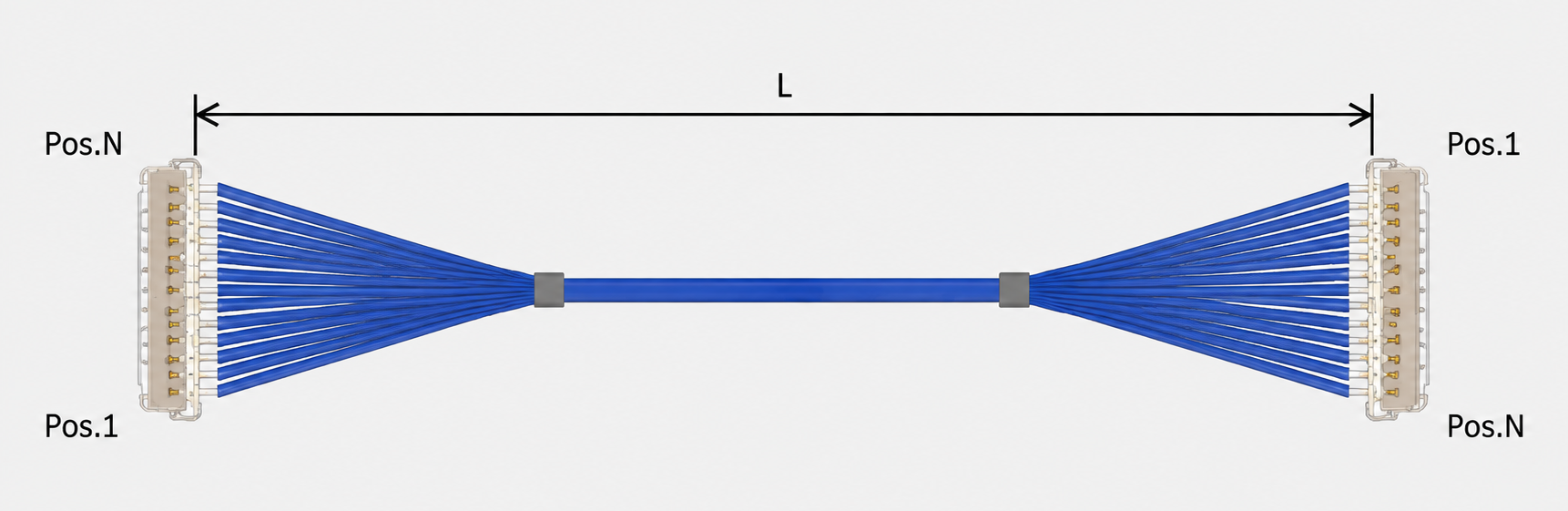
When selecting domestic-compatible or alternative options for the I-PEX 82654-100B-02-D, it is recommended that engineers first confirm the actual demand of the device for high-speed signals, then determine the wire diameter, impedance, and shielding structure of the ultra-thin coaxial cable; subsequently, check the 40PIN, 0.4MM Pitch configuration of the 20680-040T-01 connector to ensure that the mating size, Pin definition, and terminal connection method match the original design. If the product simultaneously has power and high-speed signal channels, it is particularly necessary to differentiate the functions of "signal transmission lines" and "power lines" and not use them for high current supply just because of similar cable appearance. For procurement personnel, it is recommended to focus on verifying the insertion and extraction fit, conduction performance, bending resistance, dimensional consistency, high and low temperature environmental adaptability, and batch production stability at the sample-making stage. For projects that require domestic alternatives, it is recommended to evaluate them one-to-one as much as possible according to the original cable connector model + PIN number + Pitch + wire specification + length + wire sequence + electrical performance + mechanical dimensions, rather than simply seeking products that are similar in appearance.

“Without the consent or authorization of this site, no one shall reproduce, reprint, distribute, cite, change, broadcast or publish the content in whole or in part in any form, nor shall there be any other violation of the copyright of this site.