


Categorization:Harness Component
In laptops, tablets, display devices, VR/AR devices, and other high-density electronic products, FPC is widely used due to its good flexibility, flat structure, and suitability for large-area wiring. However, with the increasing requirements for high-speed signal transmission, EMI control, and internal space compression of devices, extremely thin coaxial cable bundles can become an alternative or complementary solution to traditional FPC in some applications. It should be noted that extremely thin coaxial cables are not suitable for direct replacement of FPC in all scenarios. There are differences between the two in terms of structure, wiring methods, bending characteristics, impedance control, connection methods, and manufacturing processes. Therefore, for engineers, a more reasonable way of judgment is not simply to compare "who is better," but to choose based on the device structure and signal requirements. This article takes I-PEX 82288-100B-02-D as the reference object, which belongs to the CABLINE®-CA II series 30Pin Micro-Coaxial Harness. It uses 40AWG extremely thin coaxial cable, 300mm cable length, 0.4mm pitch, and 1-N structure. The connector model used at the cable end is 20680-030T-01, which is compatible with AWG #40 wire material.
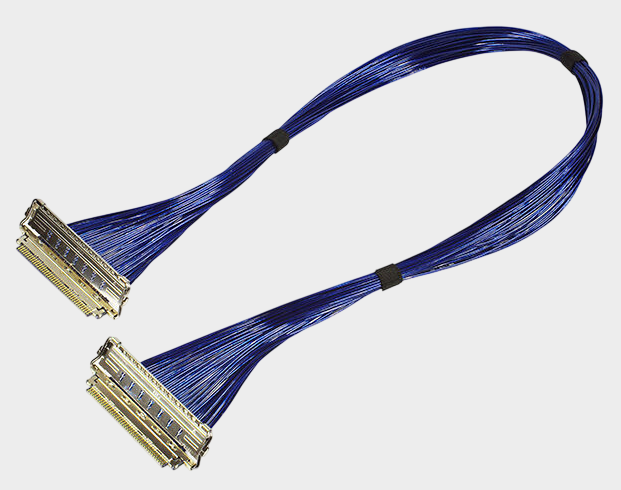
From the perspective of engineering applications, FPC is more suitable for scenarios that require large areas, flatness, fixed routing, and concentrated layout of a large number of low-speed or medium-speed signals; while when devices need to complete multi-channel high-speed signal connections in narrow spaces and pay more attention to signal integrity, EMI control, and independent cable arrangement, the advantages of ultra-fine coaxial cables become more prominent. The I-PEX 82288-100B-02-D adopts a 30Pin, 0.4mm pitch, and 40AWG Micro-Coaxial structure, which can realize multi-channel signal connections within a smaller connector space; the CABLINE®-CA II platform also uses ZenShield® full EMI shielding, multi-point grounding, and mechanical locking structure, providing the corresponding connector foundation for high-speed connection applications. For engineers, the value of ultra-fine coaxial cables is not simply "replacing a piece of FPC," but providing a different connection architecture for FPC in scenarios that require high-density, channelized, controlled signal transmission, and flexible cable routing. Therefore, in display modules, internal high-speed connections of laptops, and space-limited electronic devices, ultra-fine coaxial cable bundles may have higher application value.
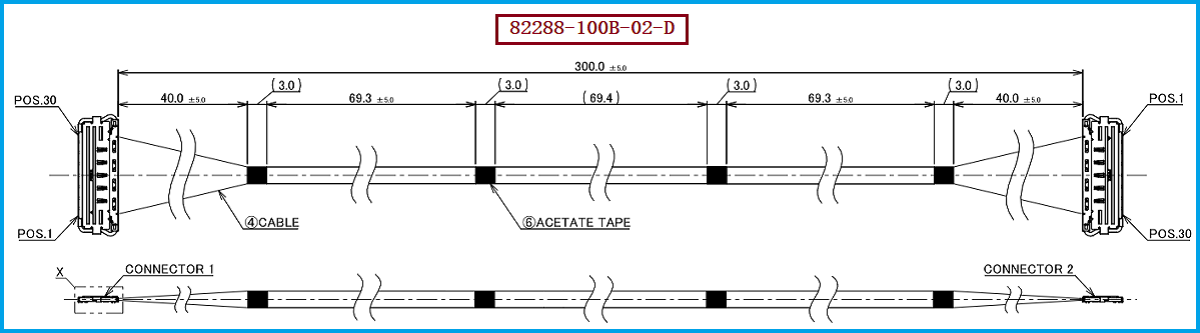
The answer is: It can be used to replace in some applications, but it cannot be considered as a comprehensive replacement. If the original FPC is responsible for the comprehensive wiring of large-area power, control signals, and a large number of ordinary signals, FPC may still have advantages in terms of overall structure and cost; if the focus of the original design is on high-speed differential signals, EMI suppression, independent signal channels in narrow spaces, or the need to flexibly route signals from one module to another, extremely thin coaxial cable bundles may be more suitable as an alternative solution. Taking the 82288-100B-02-D as an example, its 40AWG Micro-Coaxial structure combined with a 30Pin high-density connector can be designed to meet the needs of high-speed, miniaturized internal connections. However, engineers should not only confirm the number and length of pins when replacing FPCs, but also re-check the parameters such as impedance, insertion loss, return loss, crosstalk, bend radius, connector fit, assembly space, and the overall Signal Integrity of the entire machine; purchasing personnel need to confirm that the complete product material number/model and wire specifications of the alternative cable harness are consistent. Particularly, the connector at the material end of this scheme is 20680-030T-01, and the compatible wire material is AWG #40, all these parameters should be included in the specification confirmation range of the alternative solution.
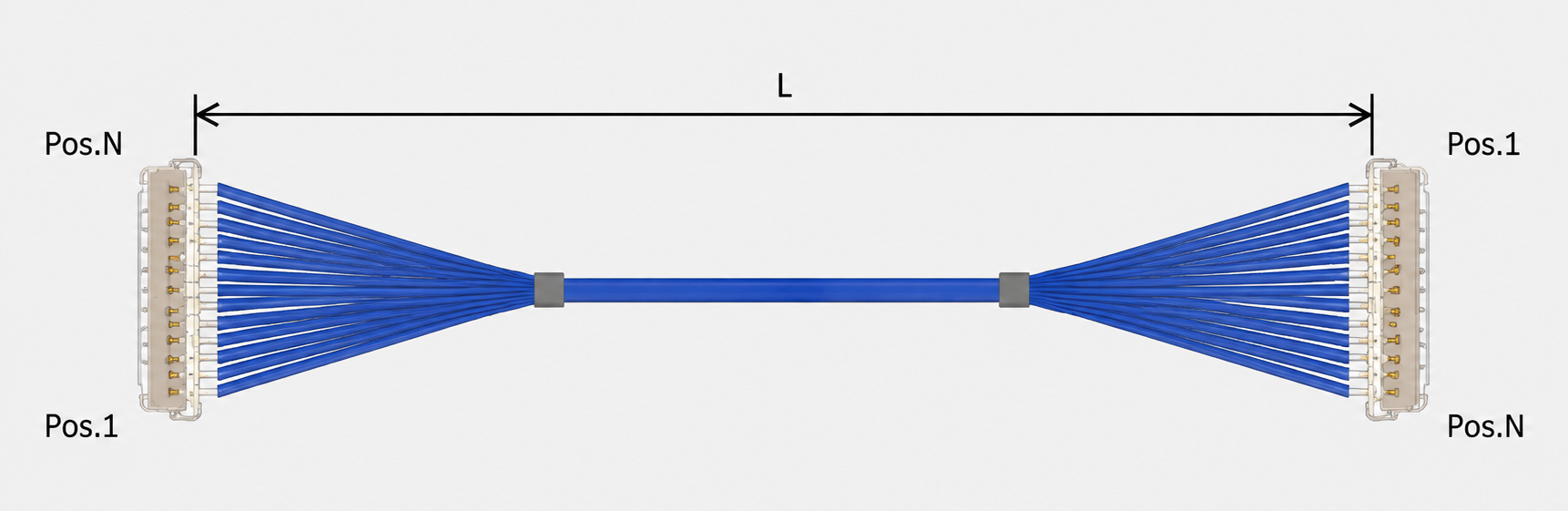
If the customer wishes to use ultra-fine coaxial cable assemblies in place of traditional FPCs, it is recommended to first determine the type of function the original FPC is responsible for, and then redesign it based on signal rate, channel count, device space, and connection structure. If the application focuses on high-speed signals and EMI control, it is advisable to give priority to the ultra-fine coaxial solution; if large-area flat wiring and complex power distribution are required, a comprehensive comparison of the overall cost and structural advantages of FPC and ultra-fine coaxial cable assemblies is necessary. For the compatibility and replacement of I-PEX 82288-100B-02-D, it is essential to check the key specifications such as 30Pin, 0.4mm Pitch, 40AWG Micro-Coaxial, 300mm, 1-N, and confirm the wire material end 20680-030T-01 connector and its AWG #40 compatibility requirements. Our company can provide: I-PEX 82288-100B-02-D compatible replacement cable assembly solutions, which can match the specifications of ultra-fine coaxial cable assemblies according to the customer's original FPC application structure and actual equipment requirements, develop samples, and produce manufacturing, providing FPC replacement evaluation for engineers and domestic compatible supply solutions for procurement personnel.
“Without the consent or authorization of this site, no one shall reproduce, reprint, distribute, cite, change, broadcast or publish the content in whole or in part in any form, nor shall there be any other violation of the copyright of this site.