


Categorization:Harness Component
Inside high-speed electronic equipment, extremely fine coaxial cable assemblies not only serve as signal connections but also directly participate in high-speed signal chains, therefore, characteristic impedance control is an important indicator for engineers when selecting cable assemblies and evaluating suppliers. For extremely fine coaxial cables, impedance is not simply determined by "AWG how many," but rather by the conductor size, dielectric characteristics of the insulation medium, the geometric relationship between the inner and outer conductors, and the shielding structure, among other factors. Taking the I-PEX 82660-100B-02-D corresponding to this article as an example, this product uses AWG#40 Micro-Coaxial Cable, 40Pin, 100mm, and 1-N structure, and is equipped with the 20847-040T-01 40Pin Plug Housing. In the high-speed transmission reference test conditions provided by I-PEX for the CABLINE-VS II 40P, AWG#40, 100mm Micro-Coaxial Cable, the given Cable Impedance is 45Ω. Therefore, for engineers, determining whether a fine coaxial cable is suitable for high-speed applications cannot only be seen from whether the "40AWG is thin enough," but also needs to further confirm its impedance target, impedance consistency, and the overall matching condition of the entire connection chain.
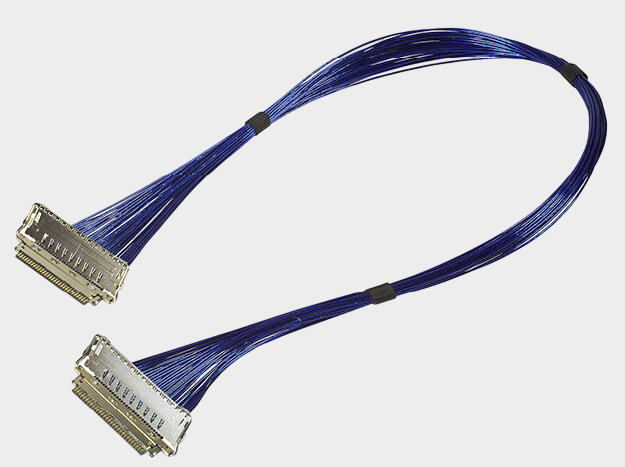
From the perspective of wire structure, the impedance control of extremely fine coaxial lines is essentially a precise control of the geometric relationship and material parameters between the conductor, dielectric, and shielding structure. Simply put, if there is any change in the diameter of the central conductor, the thickness of the insulating layer, the characteristics of the dielectric material, or the relative position between the shielding layer and the central conductor, it will cause the actual impedance to change. Therefore, in Micro-Coaxial Cables of such small sizes as AWG#40, the difficulty in production and manufacturing is not simply making the conductor finer, but ensuring the stability of the extremely fine structure during continuous production. For cable assembly factories, it is also necessary to pay attention to the effects of wire stripping, end treatment, connector assembly, and the processing process on the local geometric structure, because even if the impedance of the wire itself meets the target value, any structural changes caused by end processing may affect high-speed signal transmission. For purchasers, when choosing suppliers of extremely fine coaxial cables, it is not advisable to compare only the unit price and AWG specifications, but to focus on inquiring whether the supplier can match the wire materials according to the target impedance, control batch stability, and carry out necessary high-speed performance verification.
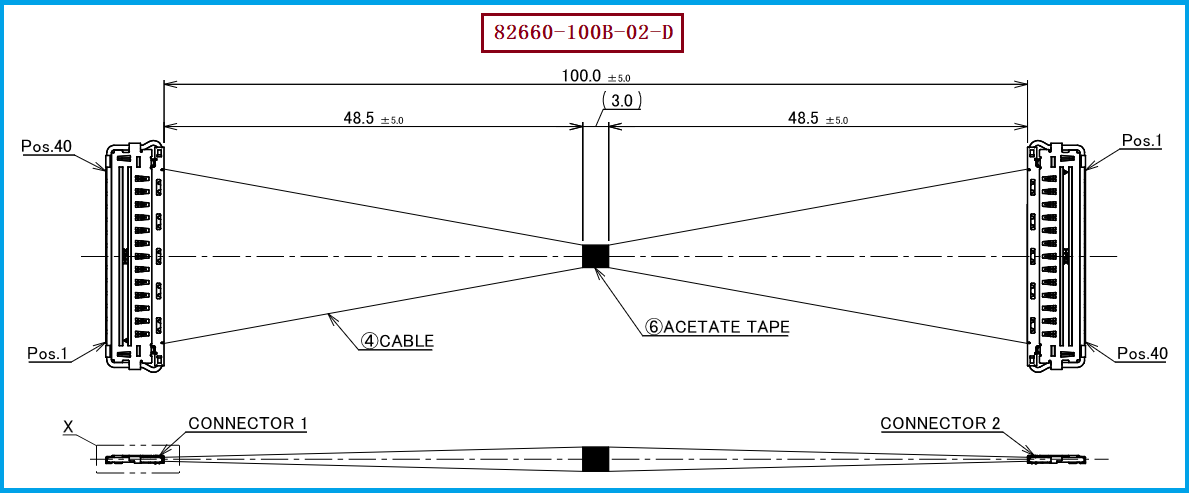
For the selection or compatible alternatives of I-PEX 82660-100B-02-D, it is recommended that engineers and purchasers confirm it as a complete cable assembly, that is: CABLINE-VS II, 40Pin, AWG#40 Micro-Coaxial Cable, 100mm, 1-N structure, and 20847-040T-01 connector, rather than judge compatibility solely based on "40Pin+40AWG". Especially in high-speed signal applications, it is necessary to confirm the original design's impedance requirements, Pin Assignment, cable length, connector mating, shielding structure, and PCB end design. If the supplier only provides AWG#40 wire but cannot guarantee the target impedance and batch consistency, then even if it can be mechanically connected, it does not mean that it can achieve the original system's high-speed performance. Our company can provide: I-PEX 82660-100B-02-D compatible alternative cable assembly solutions, around the 20847-040T-01 connector, AWG#40 ultra-fine coaxial cable, 100mm cable length, 40Pin, and the original structural requirements for matching development, and can confirm the wire structure, impedance requirements, and end processing scheme in accordance with the actual high-speed application needs of customers, providing compatible alternative choices for engineering development and bulk procurement.
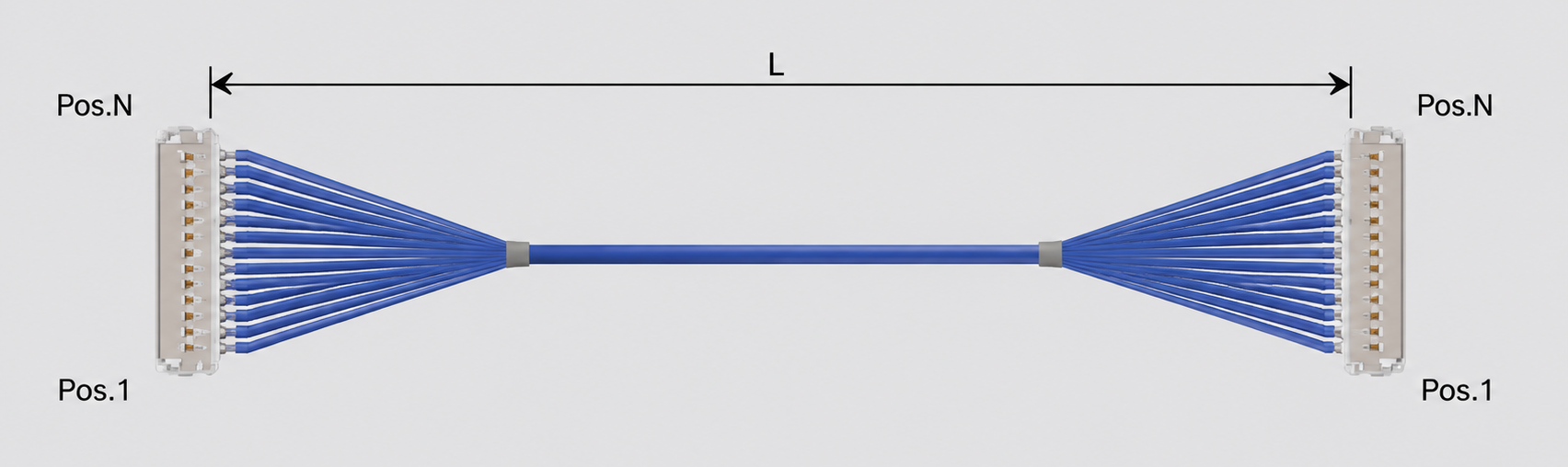
In practical high-speed transmission, engineers are concerned not only with the impedance of a specific cable material but also with the stability of the entire cable assembly across different positions and batches. AWG#40 itself is a very fine wire material specification, and even minor size changes during the manufacturing process can affect impedance. Therefore, quality control of ultra-fine coaxial cable assemblies should extend from wire production to end processing and connector assembly, with a focus on ensuring the consistency of the conductor, insulation layer, and shielding structure, and combining with actual products for necessary impedance and high-speed signal verification. For I-PEX 82660-100B-02-D such 40Pin high-density cable assemblies, the connectors use the CABLINE-VS II platform, featuring a 0.5mm Contact Pitch, horizontal insertion and extraction, mechanical lock, and ZenShield® full shielding; these structures serve high-density, high-speed data connections, but the final system performance still depends on the matching of cables, connectors, PCBs, and the entire chain. Therefore, impedance control of ultra-fine coaxial cables is not achieved by a single process, but is the result of the combined effect of materials, dimensions, structure, processing, and testing.
“Without the consent or authorization of this site, no one shall reproduce, reprint, distribute, cite, change, broadcast or publish the content in whole or in part in any form, nor shall there be any other violation of the copyright of this site.