In the process of design and implementation of modern automation systems, a stable and reliable connection solution is the foundation for efficient and maintainable operation. With the advancement of Industry 4.0 and intelligent manufacturing, standardized and modular connection components have become an inevitable trend. As a globally renowned industrial connection brand, HARTING's M12 and M8 cable assemblies have become one of the standard options for automation equipment such as sensors, actuators, and controllers, thanks to their high performance, diverse types, and mature technology.

HARTING M12/M8 cable: Performance and Application Analysis
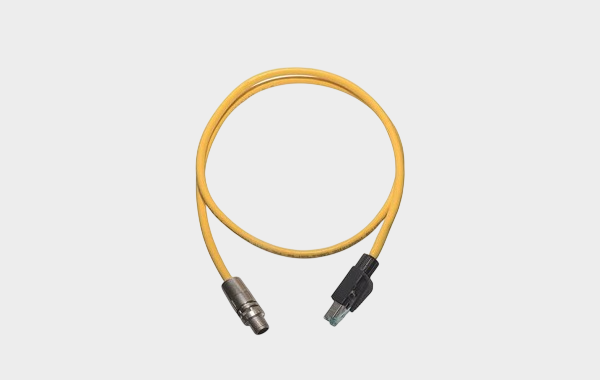
HARTING's M8 and M12 series circular connectors and pre-assembled cable assemblies cover most interface requirements in the field of industrial automation. Their product line includes straight and right-angle, different pole numbers, and coding types of connection solutions. At the same time, they support a variety of cable length options, adapting to the flexibility of on-site wiring.
• M12 connection cable is widely used in signal and data transmission for equipment such as sensors, actuators, field buses, and industrial Ethernet, supporting various specifications including A/B/D/X/L coding, and can carry the needs from standard IO to high-speed data applications.
The M8 series is usually used for connection scenarios where space is limited, for smaller sensor or actuator endpoints, and is compatible with the transmission of common low-power signals.
In addition, some HARTING M12 connectors utilize advanced push-in termination technology (Push-In) to achieve quick wiring without special tools, effectively reducing installation time and field debugging difficulties.
Two, selection and compatibility as well as reference suggestions for domestic substitution solutions
In actual project selection, when using HARTING M12/M8 cable assemblies, the following points should be paid attention to:
Determine specifications based on the on-site application environment.
Standard signal transmission can preferably choose A encoding M12 cable.
Industrial Ethernet and other high-bandwidth applications can choose D encoding or X encoding products.
Connector type and wiring requirements match:
Straight or right-angle plugs can be flexibly selected according to the spatial layout.
The shielding version can improve anti-interference performance.
Compatibility and Alternative Solutions Reference:
The existing equipment uses M8/M12 interfaces, and it is recommended to prioritize standardized products to ensure mechanical and electrical compatibility.
For specific environmental requirements, refer to HARTING push-in termination connectors to improve on-site assembly efficiency.
Domestic alternative solution recommended:
With the advancement of domestic connector technology, there are already many suppliers offering domestic alternatives based on the M8/M12 standard specifications, covering common coding and interface specifications. Combined with on-site testing and long-term stability assessment, introducing domestic alternative solutions can ensure reliability while optimizing costs.
As a key connection component in industrial automation systems, the HARTING M12/M8 cable series provides efficient solutions for engineers and system integrators with its standardized design, extensive product line, and reliable quality. Whether it is for sensor network, fieldbus, or industrial Ethernet wiring scenarios, reasonable selection and intelligent compatibility solutions are crucial for ensuring the long-term stable operation of the system.
We have been focusing on and deeply cultivating the research and market application development of M12/M8 automation connection solutions and domestic substitute products. If you are interested in the domestic substitute solution for HARTING connectors, have procurement needs, or wish to discuss related selection schemes, please contact: Manager Zhang.
18665383950, WeChat number), looking forward to in-depth communication and cooperation with you, jointly promoting the optimization and localization of automation systems.