


Categorization:Harness Component
I. Core Characteristics of Extremely Fine Coaxial Beam
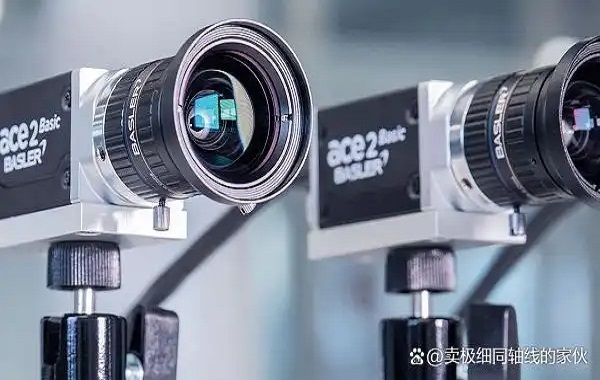
The ultra-fine coaxial cable束 has an accurately controllable impedance. For high-speed signals, common requirements are 50Ω single-ended or 100Ω differential. Even minor impedance deviations can cause reflections and jitter, affecting the stability of the CoaXPress link. It has a compact structure, complete shielding layer, and can effectively reduce signal attenuation and crosstalk, while also resisting external electromagnetic interference. The small bending radius design and excellent flexibility can adapt to the internal wiring of the Basler ace compact body, and the reliable connection methods, including miniature coaxial connectors or direct welding to PCB, also ensure long-term stability.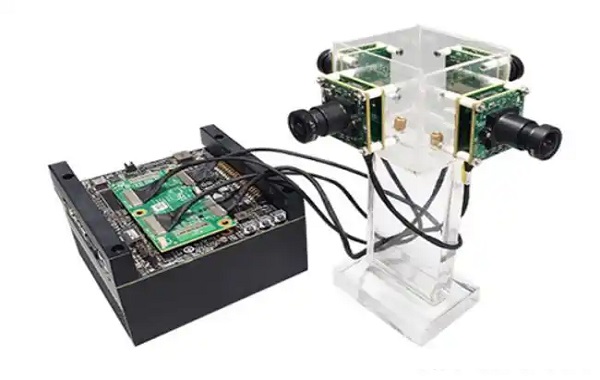
The key points to pay attention to when selecting a wire harness
When selecting a miniature coaxial cable assembly, attention must be paid to bandwidth and frequency response, especially for CoaXPress CXP-12 with data rates up to 12.5 Gbps, which has strict requirements for low loss and high-frequency performance. Shielding and anti-interference capabilities are also crucial; choosing cables with high-density braiding or complete shielding layers can reduce EMI influence. The flexibility and durability of the cable assembly should match the camera assembly requirements to ensure no breakage or performance decline over the long term. Process compatibility is also very important, including interface type, pad spacing, and welding process temperature, to ensure assembly control.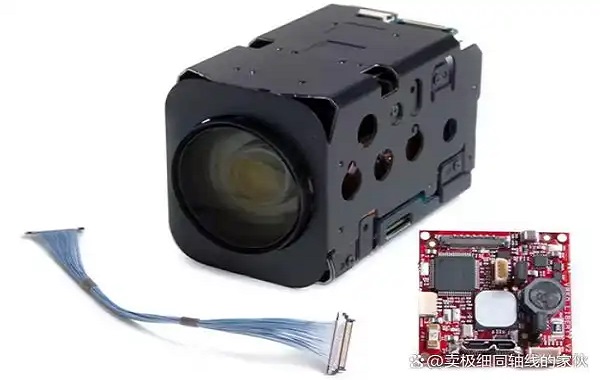
Section 3: Application Techniques and Suggestions
In Basler ace series industrial cameras, it is recommended to prioritize high-precision impedance-controlled cables with impedance tolerance controlled within ±5%. According to the internal space design, balance the cable diameter and flexibility. Too thin cables may increase resistance and weaken shielding performance. Choose materials that can withstand high temperatures and have a long bending life to ensure long-term operational reliability. At the prototype stage, signal integrity can be verified through TDR (time-domain reflection) and S parameter analysis to ensure the stability of high-speed signal transmission within the interior, providing reliable protection for the external CoaXPress interface.
“Without the consent or authorization of this site, no one shall reproduce, reprint, distribute, cite, change, broadcast or publish the content in whole or in part in any form, nor shall there be any other violation of the copyright of this site.