


Categorization:Harness Component
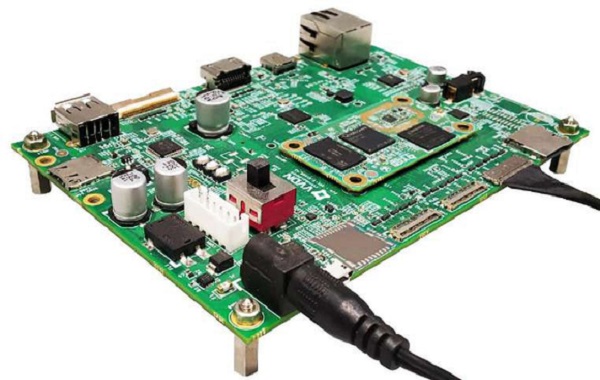
One, the interconnection challenges of AI SoC
The SoC integrates multiple subsystems such as image processing, display control, storage management, and high-speed I/O interfaces. To achieve efficient collaboration, the systems need to interact with each other through high-speed buses, such as MIPI for transmitting camera data, PCIe for connecting AI acceleration cards, and USB and eDP interfaces for external communication and display output. Due to the high signal frequency, fast rate, and the requirement for low crosstalk and impedance matching, traditional ribbon cables or FFC ribbon cables are difficult to meet the requirements. The ultra-fine coaxial cable束 with compact structure and excellent shielding performance has become the preferred solution for realizing high-speed interconnection.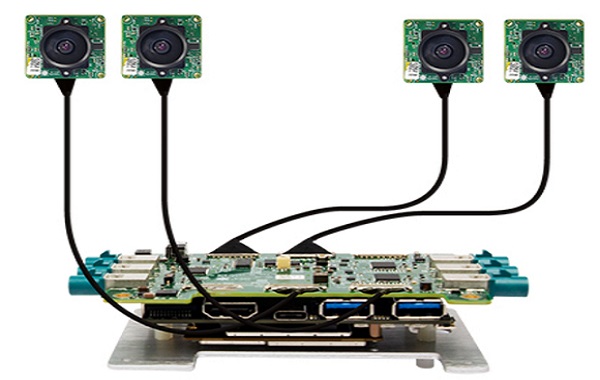
Technical advantages of extremely fine coaxial cable束
Extremely thin coaxial cable束 has multiple advantages in AI SoC applications: high frequency with low loss, supporting high-speed transmission above 20Gbps; precise impedance control, ensuring multi-channel signal synchronization and stability; excellent EMI shielding performance, suppressing electromagnetic interference, ensuring signal integrity; and a balance between miniaturization and flexibility, with an outer diameter as low as 0.4mm, suitable for compact layouts of AI camera modules and edge computing board cards. Through these characteristics, it performs excellently in high-speed, multi-interface interconnection, meeting the strict reliability requirements of AI systems.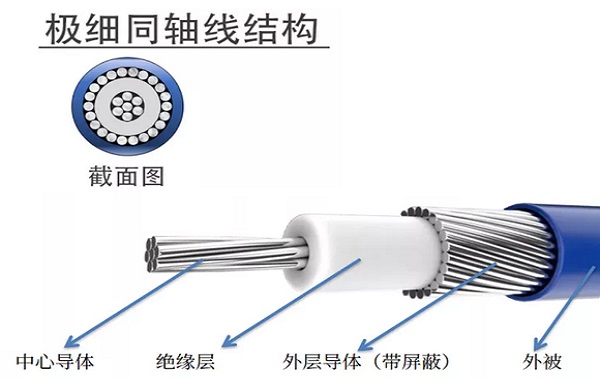
Typical Applications and Future Development Trends
In AI SoC modules, extremely fine coaxial cable bundles are commonly used for MIPI CSI/DSI camera interfaces, PCIe/USB high-speed channels, and eDP/HDMI display interfaces to achieve high-speed interconnection for image acquisition, data transmission, and display output. In the future, with the increasing bandwidth and power consumption requirements of AI SoC, extremely fine coaxial cable bundles will show a trend of higher frequency, lower loss, and greater flexibility. Through the use of new conductor materials and lightweight design, they will meet the high-performance application demands of drones, wearable devices, and 8K image transmission.
“Without the consent or authorization of this site, no one shall reproduce, reprint, distribute, cite, change, broadcast or publish the content in whole or in part in any form, nor shall there be any other violation of the copyright of this site.