


Categorization:Harness Component
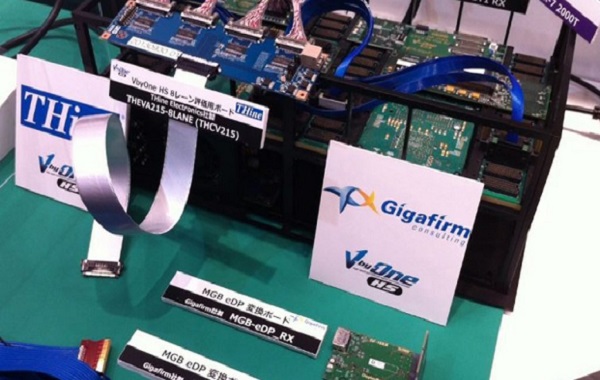
V-by-One HS/US interface and the advantages of ultra-thin coaxial cable束
The V-by-One HS interface offers a single channel data rate of approximately 3.75 Gbps, while the upgraded V-by-One US interface can break through the 10 to 16 Gbps range, widely used in high-resolution display, in-vehicle central control screens, industrial cameras, and other fields. In high-speed data transmission, extremely thin coaxial cable bundles have precise impedance control, full shielding design, and excellent flexibility, which can significantly reduce insertion loss and reflection loss, suppress EMI and crosstalk, ensure signal waveform stability, and adapt to space-limited wiring environments.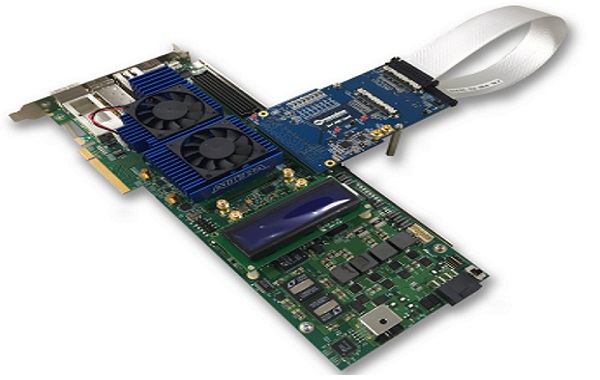
Design Key Points and Application Suggestions
In practical applications, in order to fully utilize the performance of Micro Coaxial cable harnesses, it is necessary to maintain impedance continuity and ensure consistent impedance matching with connectors and PCB ends; control the cable length and channel skew (skew), to ensure timing synchronization at high speed; rationally route and improve shielding grounding to reduce external interference; and at the prototype stage, conduct eye diagram and bit error rate (BER) tests to verify signal integrity and system transmission stability. Through these design strategies, high-speed and stable data transmission through the V-by-One interface can be achieved.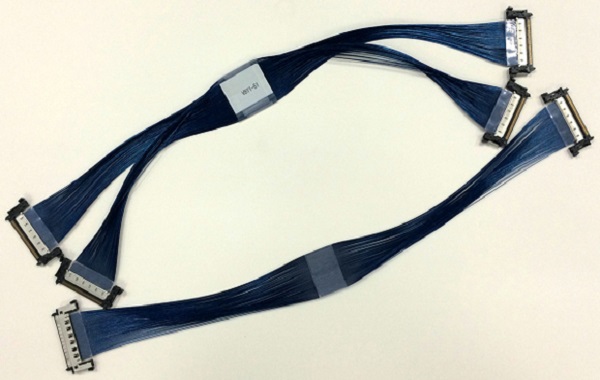
Typical application scenarios
In high-end automotive display systems, extremely thin coaxial cable bundles connect the main control board with the display module, saving space while also resisting vibrations and electromagnetic interference in the vehicle environment. In fields such as industrial cameras, high-resolution surveillance, and AR/VR headsets, Micro Coax cable bundles are also widely used to support stable and high-speed transmission of high-frame-rate image data, ensuring system reliability and performance in complex environments.
“Without the consent or authorization of this site, no one shall reproduce, reprint, distribute, cite, change, broadcast or publish the content in whole or in part in any form, nor shall there be any other violation of the copyright of this site.