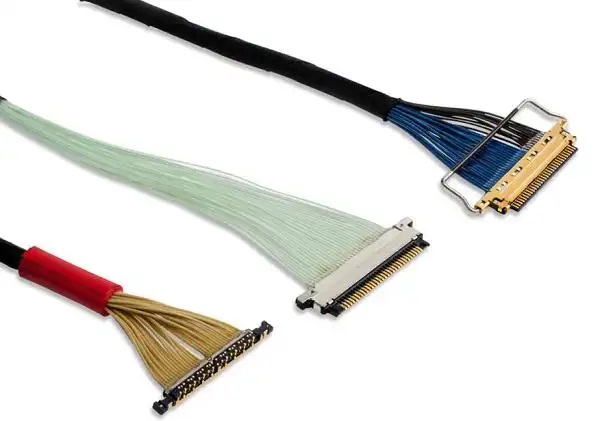
With the development of electronic devices towards slimming and high-speed, micro coaxial cable, thanks to its excellent shielding performance, flexible structure, and extremely thin and light design, is widely used in precision fields such as laptops, tablets, smartphones, vehicle-mounted cameras, and medical imaging equipment. However, in actual engineering applications, signal attenuation has become a common problem that troubles many design engineers. It can affect the transmission stability at a light level and cause the whole machine's performance to degrade at a serious level. So, how to effectively deal with the signal attenuation of the extremely thin coaxial cable束? This article takes the I-PEX 20346-030T-32R connector as an example to discuss the optimization solution.
Common causes of signal attenuation
In high-speed transmission environments, the signal attenuation of extremely thin coaxial cables is usually caused by the following aspects:
Cable length too long — increased high-frequency signal energy loss.
Impedance mismatch —— causes signal reflection, affecting signal integrity.
Plug-in contact不良 —— Contact resistance instability or signal interruption occurs.
External EMI interference – Electromagnetic interference reduces signal quality.
It is necessary to comprehensively optimize from multiple dimensions such as harness selection, connector performance, and assembly technology to effectively reduce signal attenuation.
I-PEX 20346-030T-32R connector introduction
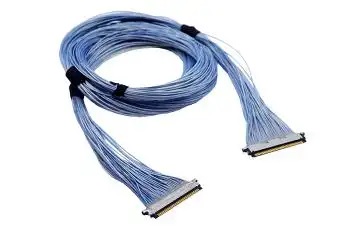
I-PEX 20346-030T-32R belongs to the CABLINE® V series launched by I-PEX, a high-performance ultra-thin coaxial connector for high-speed signal transmission. It features a 0.4mm pitch horizontal plug-in design, combining ultra-thin structure and high reliability, suitable for various high-speed transmission applications.
Main specifications and features:
Contact spacing: 0.4mm
• Pin Count: 30Pin
Maximum height: 1.15mm
Compatible Wire Material: Supports AWG #40 and finer Micro Coaxial Cable
• Transmission Rate: Supports up to 5 Gbps data rate
Compatibility Standards: USB 3.1 Gen1 (5 Gbps/lane), V-By-One HS 1.4 (4 Gbps/lane) and other high-speed standards
Optimization Suggestions for Signal Attenuation
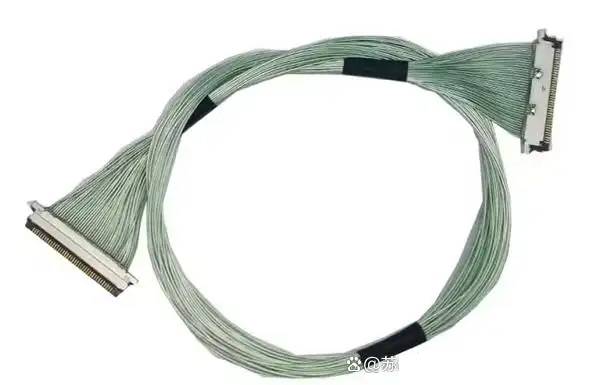
In the design and assembly process of ultra-fine coaxial cable bundles, the following strategies can significantly improve the signal attenuation problem:
Select high-quality connectors
Select connectors with low loss and high integrity design like I-PEX 20346-030T-32R to ensure stable transmission of high-speed signals.
Optimize harness design
Shorten the cable length, avoid excessive bending, and reduce signal energy loss from the source.
Strengthen the blocking measures
Utilize cables and connectors with shielding layers to suppress external EMI interference and enhance signal integrity.
Ensure stable connection
Regularly check the contact condition of the harness and connectors to avoid signal attenuation due to loosening or contamination.
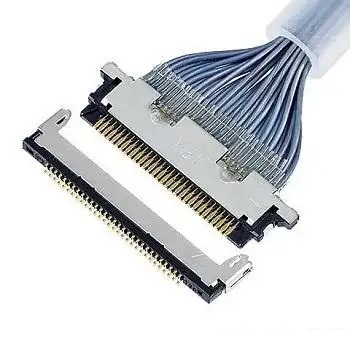
In the era of high-frequency and high-speed transmission, the signal attenuation problem of extremely thin coaxial cable bundles cannot be ignored. By choosing high-performance connectors (such as I-PEX 20346-030T-32R) and配合optimized cable design and shielding structure, significant reduction in loss and improvement in system stability can be achieved. With the advantages of high speed, low loss, and high reliability, the I-PEX 20346 series is becoming a favored connection solution in various high-end electronic devices.
I am Kunshan Jiecong Fu Precision Electronic, focusing on the design and customization of high-speed signal cable harnesses and extremely thin coaxial cable harnesses for a long time, committed to providing stable and reliable high-speed interconnect solutions to our customers. If you have any related needs or would like to learn more, please contact: Manager Zhang.
18913228573 (WeChat number).